First Time Van Life: 10 Days Around Tasmania
- Dates
- 23 Mar 2024 – 1 Apr 2024
- Distance
- 24.5km
- Duration
- 10d
- Cost (AUD, pp)
- $2,000
A rented campervan, a loose 10-day loop, and the trip that turned "maybe I'd like van life" into a genuine yes.
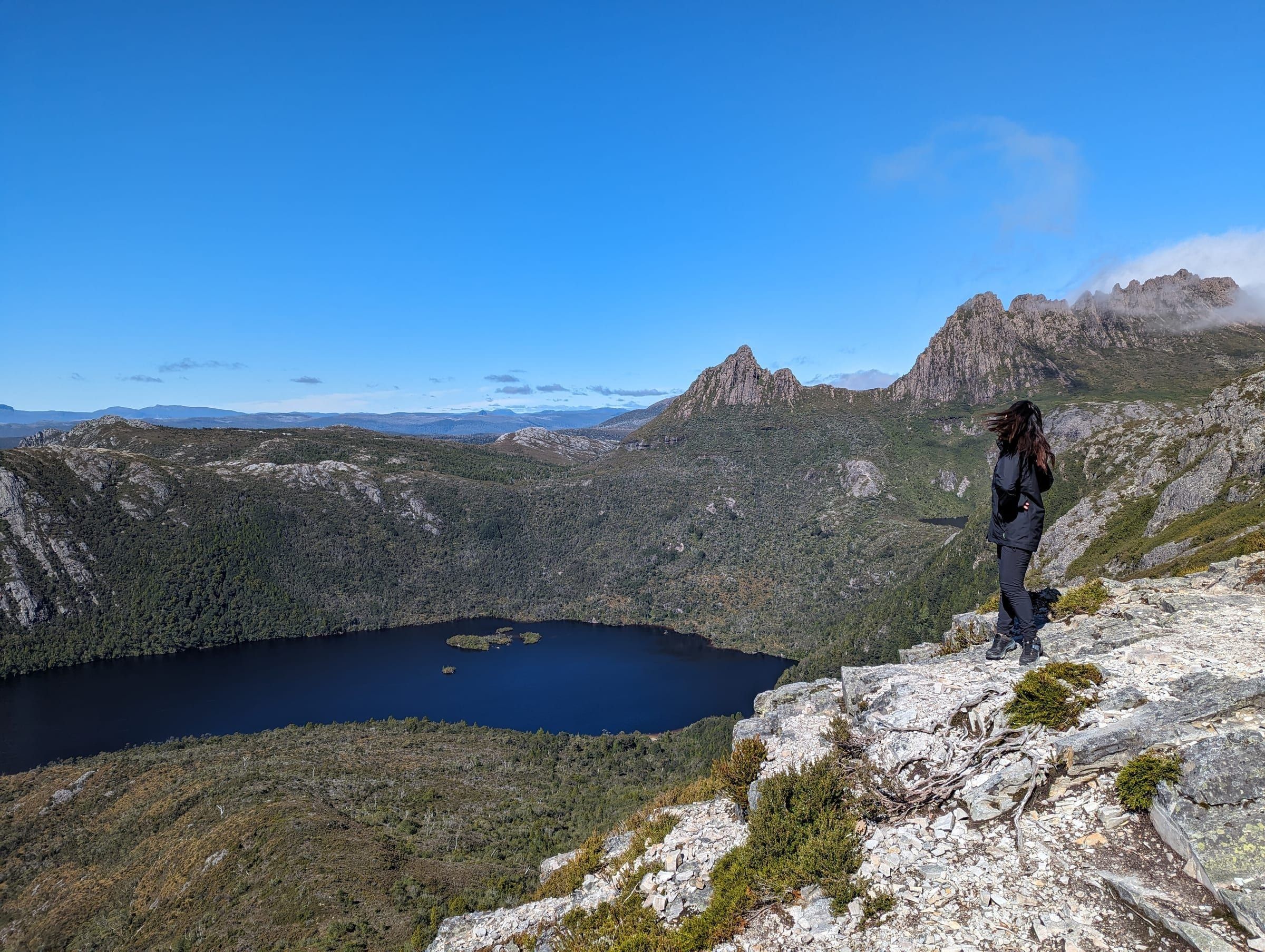 Cradle Mountain: the view that made the whole loose plan worth it.
Why Tasmania, Why a Van
By March 2024 I'd already had a big year of travel: Southeast Asia mid-year, New Zealand in December, a work trip through Auckland in February. Tasmania wasn't originally the plan; it became one, mostly out of curiosity about whether campervan life was actually for me, not just something I liked the idea of. We had a rented campervan, with a loose route and no fixed itinerary: Mt Field, Cradle Mountain, the west coast, then across to the east coast beaches.
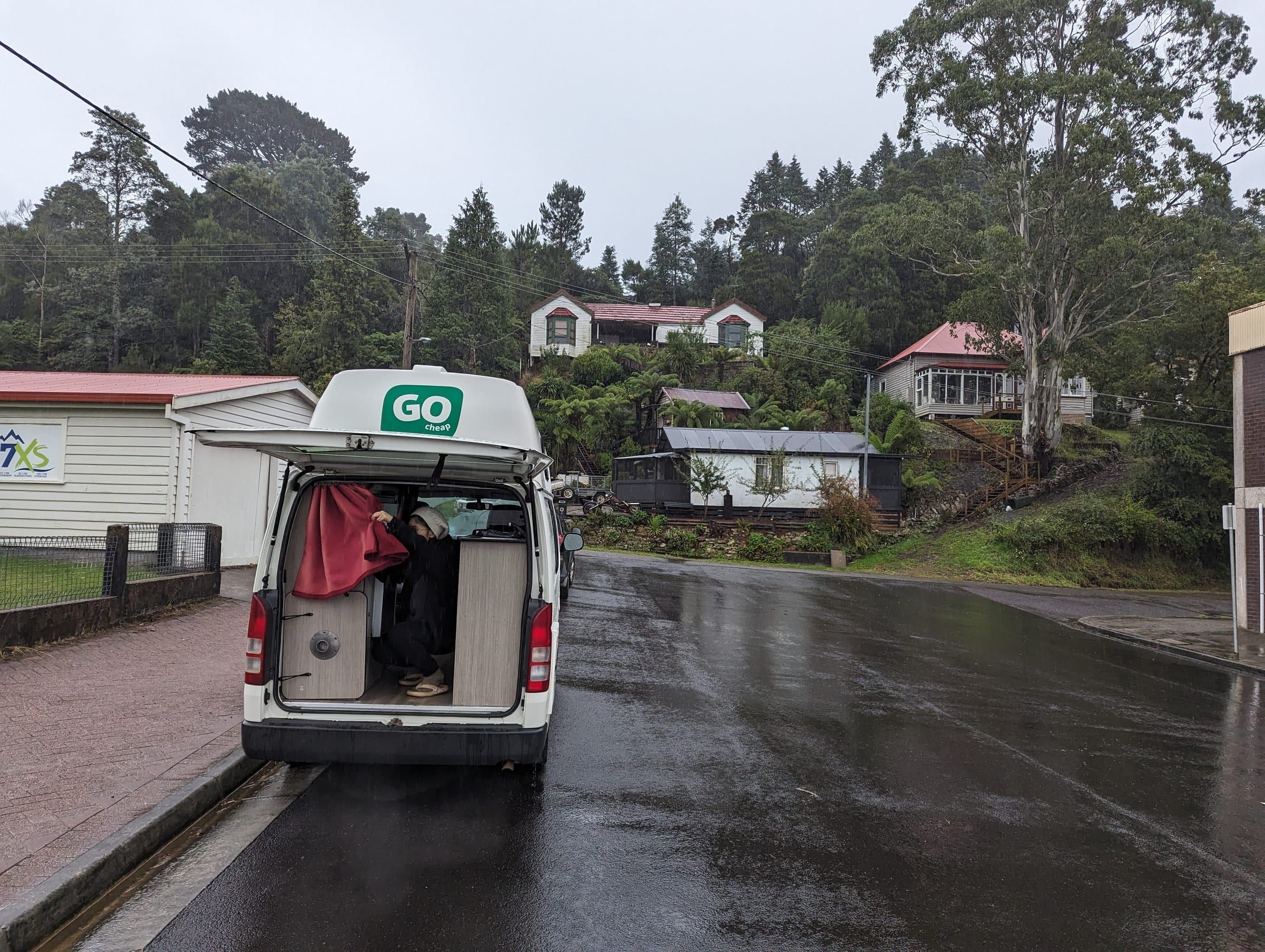 The van: the whole home for 10 days, parked wherever the day happened to end.
Ten days later, the answer to "is this life for me?" was an easy yes.
Trip Highlights at a Glance
Distances marked with an asterisk are estimates, not exact recorded figures.
Mt Field: Tarn Shelf and the Three Falls Walk
The trip started fast: landed, did a supply run, and were on the Tarn Shelf track within hours of touching down. It's a solid climb, wind strong enough to lean into, but the reward is immediate: a shelf of tarns so vividly blue they looked unreal, with sweeping views that make you feel like you're standing above the whole park. Coming down from that hike, legs tired and lungs full of proper mountain air, is one of those "this is exactly why I do this" moments.
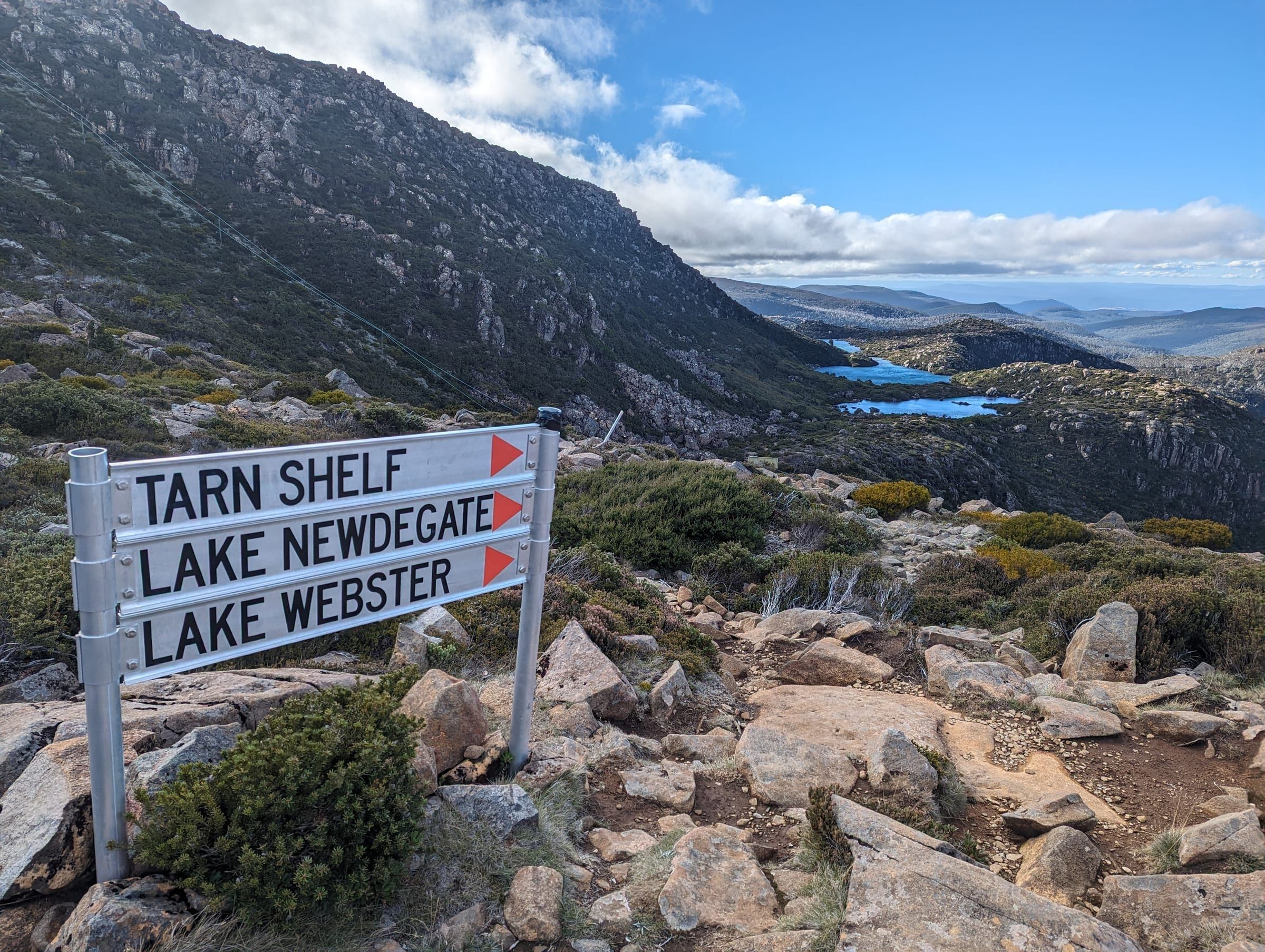 Tarn Shelf: the water really is that blue.
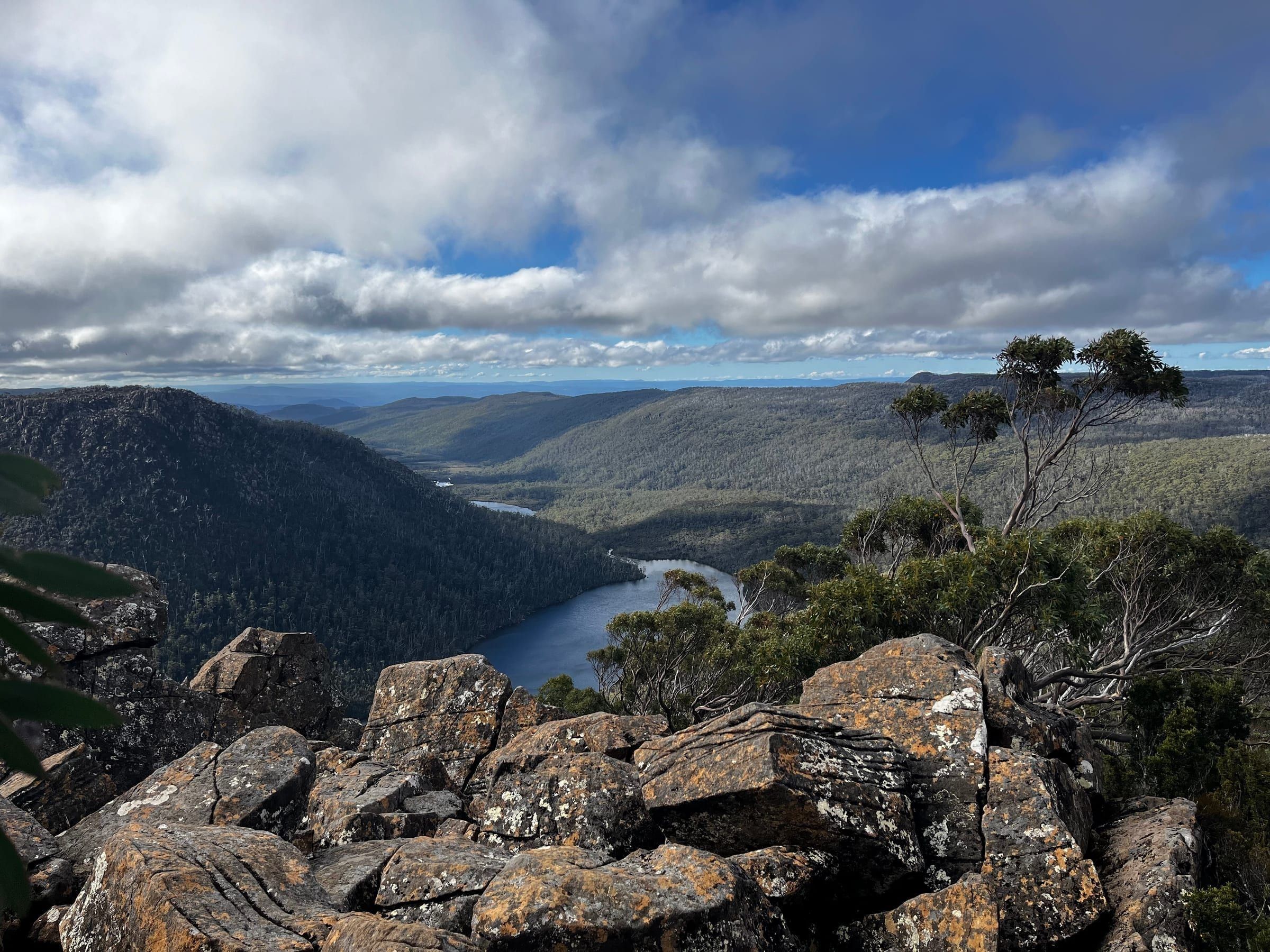 The view opening up on the way to Tarn Shelf. Mt Field has range.
The next morning brought the Three Falls Walk, a gentler outing through rainforest and past cascading waterfalls, with golden autumn leaves lighting up the canopy in a few standout spots. A good contrast to the exposed, windy climb of the day before, and proof this park has range.
Cradle Mountain: Rainforest, Stairs, and a Rock Scramble
Cradle Mountain delivered the trip's most varied single hike: a long paved approach with the mountain looming overhead, then a drop into rainforest with a waterfall, a punishing set of stairs, and finally a rock scramble assisted by a metal chain to reach a partial lookout. It's the kind of hike that changes character every 20 minutes; you finish it having done four different kinds of walking in one outing.
Reaching the lookout, even partially, was worth pausing for: a few minutes of just sitting with the view, the terrain having changed the whole way up, before heading back down.
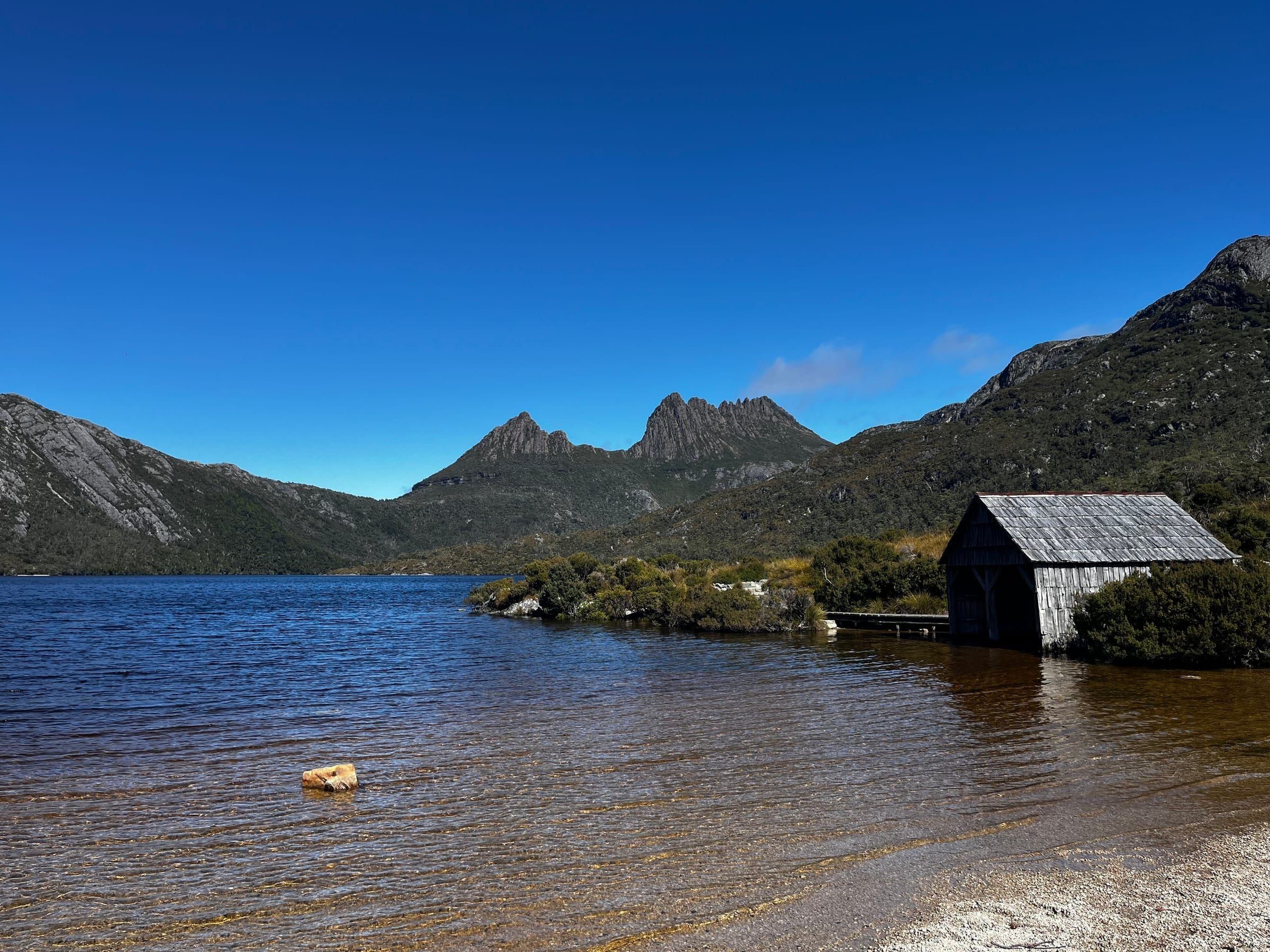 The Dove Lake boat shed: impossible to visit Cradle Mountain and not photograph this one.
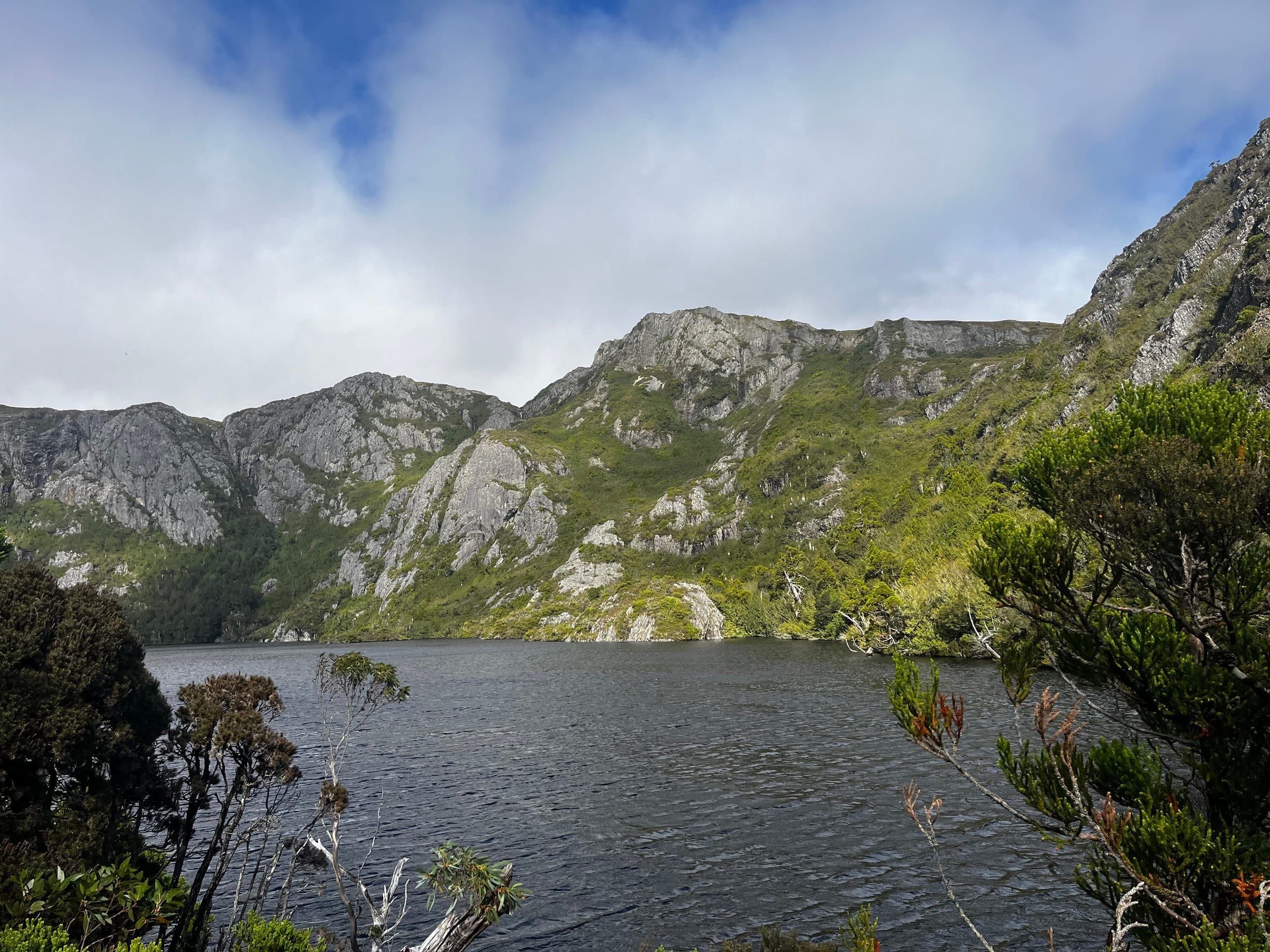 One of the quieter stretches of shoreline along the way.
The West Coast: Lake St Clair and Iron Blow
Between the big hikes, some of the best moments were the smaller stops. Lake St Clair, Australia's deepest lake, fed by glacial meltwater, was a quieter walk along the shoreline, capped off with one of the widest rainbows either of us had ever seen arching over the water.
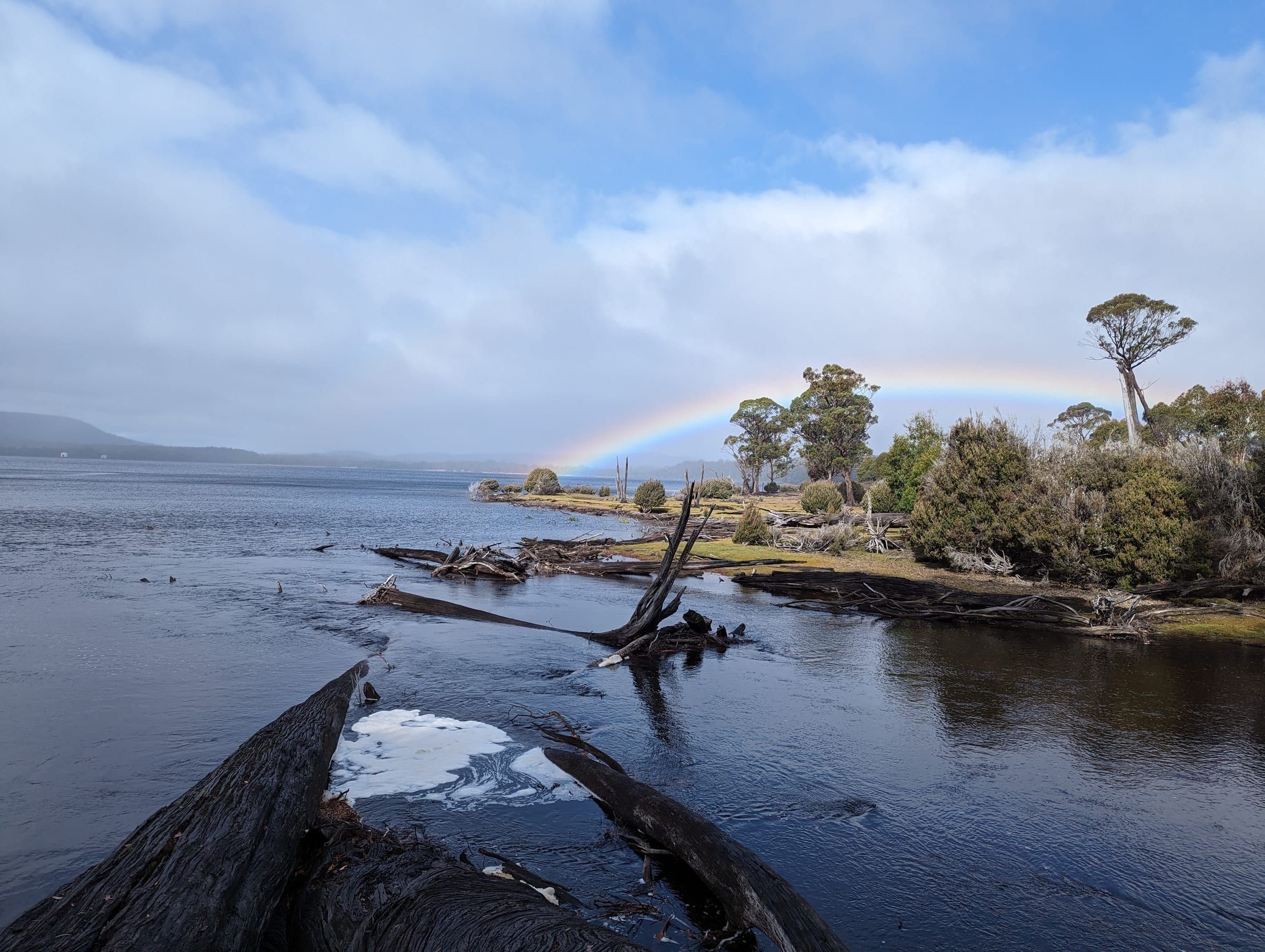 Lake St Clair: one of the widest rainbows either of us had ever seen.
Further along, on the drive toward Queenstown, a stop at Iron Blow Lookout became a two-attempt affair. The first visit was a complete whiteout, fog so thick the viewing platform's railings disappeared a few metres out, nothing below but grey. We walked out anyway, stood at the edge of what we were told was a huge open pit, and saw precisely nothing.
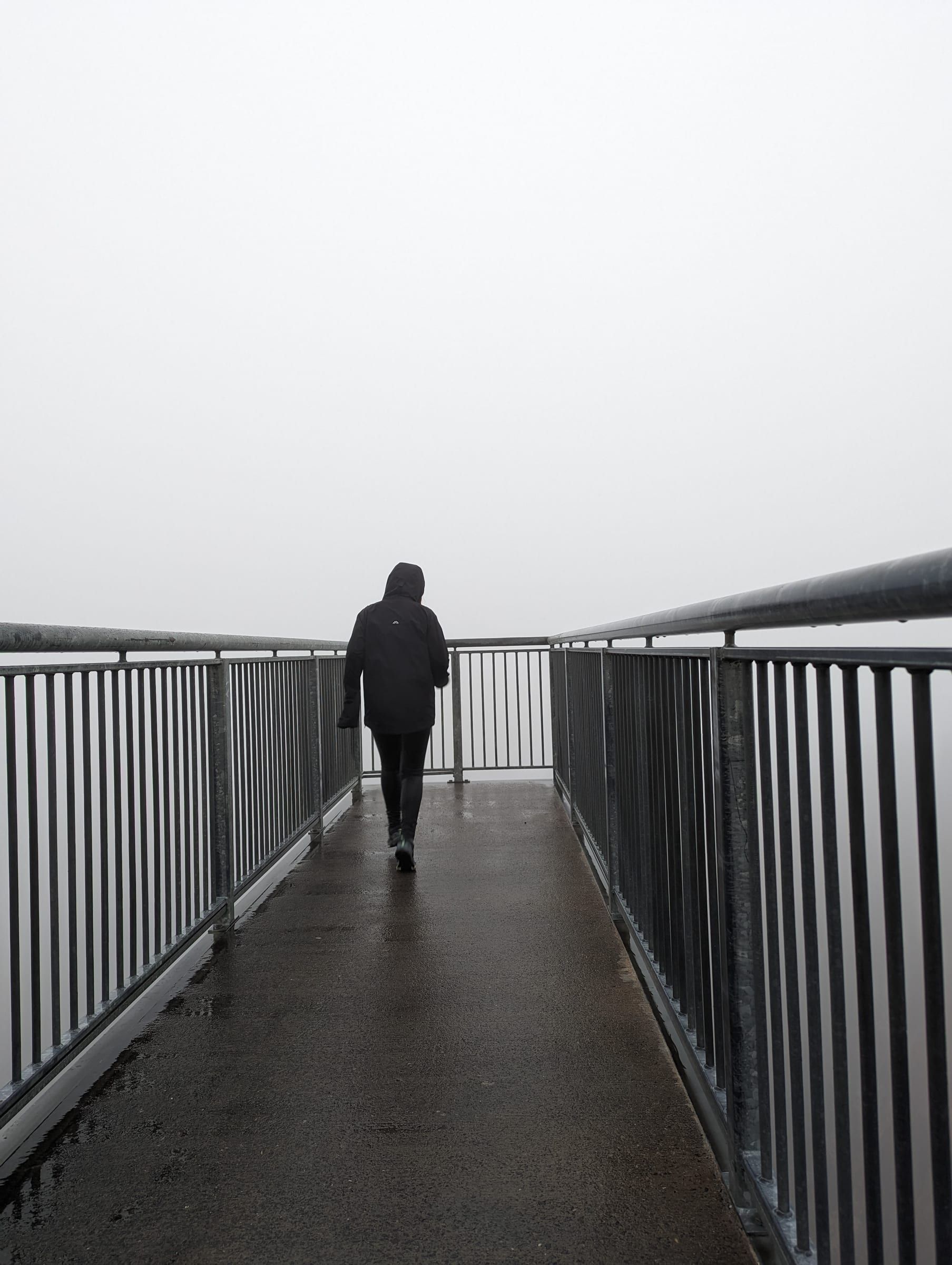 Iron Blow, attempt one: walking out to a view that simply wasn't there.
We went back the next morning. This time the fog had lifted just enough to reveal what had been hiding the whole time: a huge old mine pit filled with vivid turquoise water, still half-wrapped in cloud rolling over the ridge above. Worth the second trip, easily.
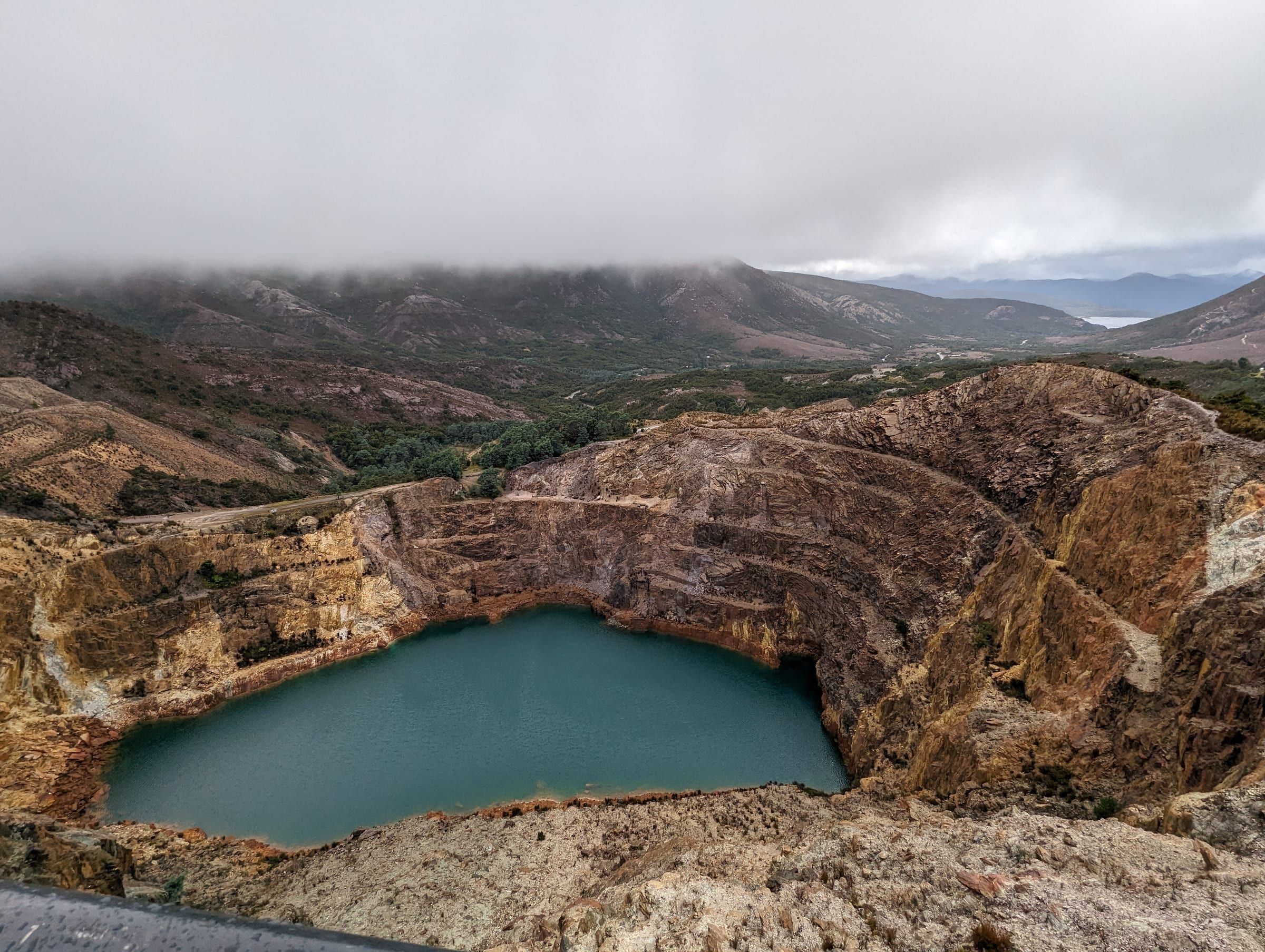 Iron Blow, attempt two: the view that had been there all along.
East Coast: Sunrise, a Swim, and Three Thumbs Lookout
Mornings at Mayfield Beach started early and unhurried: coffee made on the stove, drunk standing at the waterline while the sky went from grey to gold to a full, blinding sunrise over the water. It was warmer than expected, so a swim felt less like a decision and more like the obvious next move.
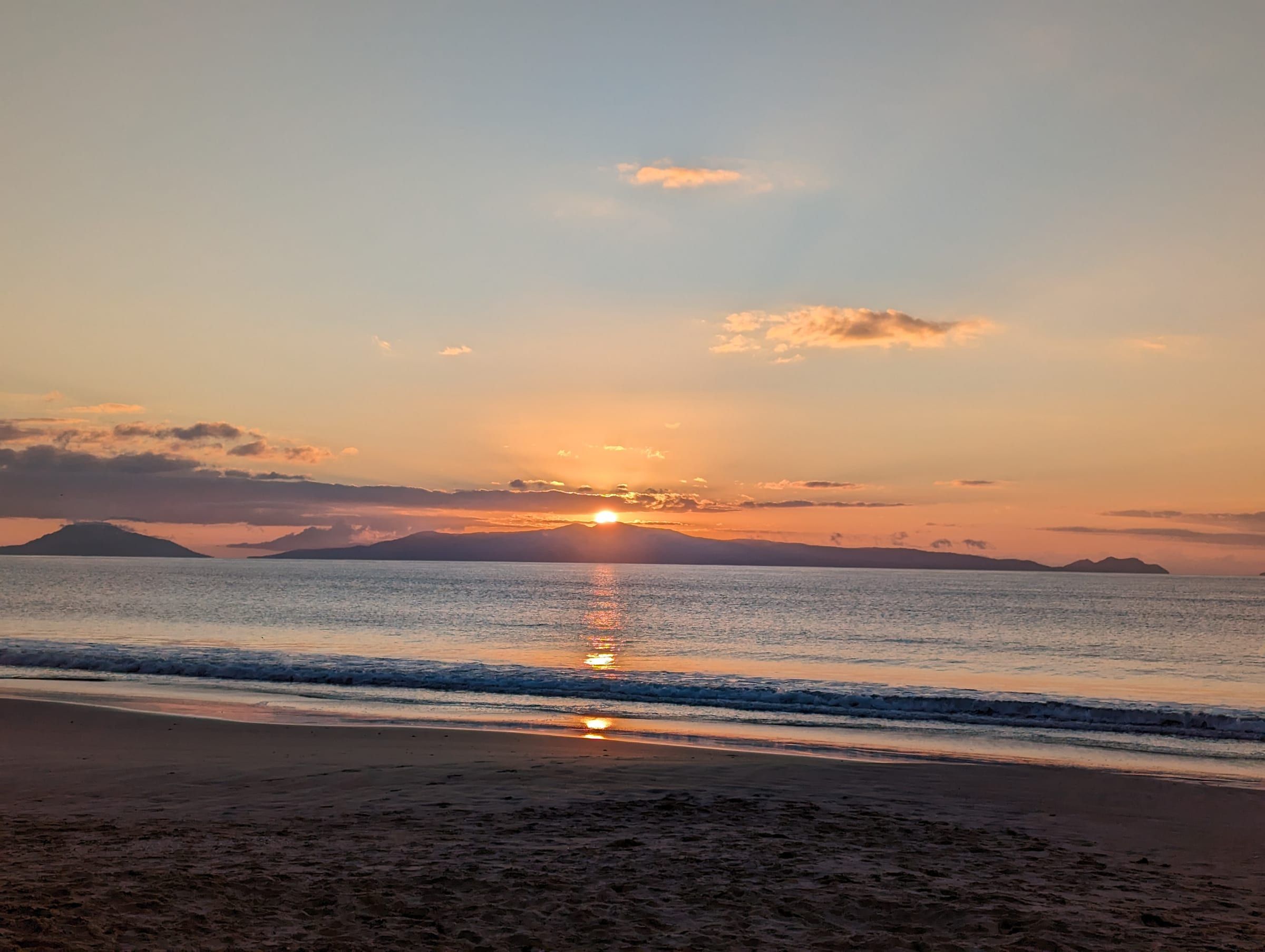 Sunrise coffee turned into sunrise swim. The water was warmer than either of us expected.
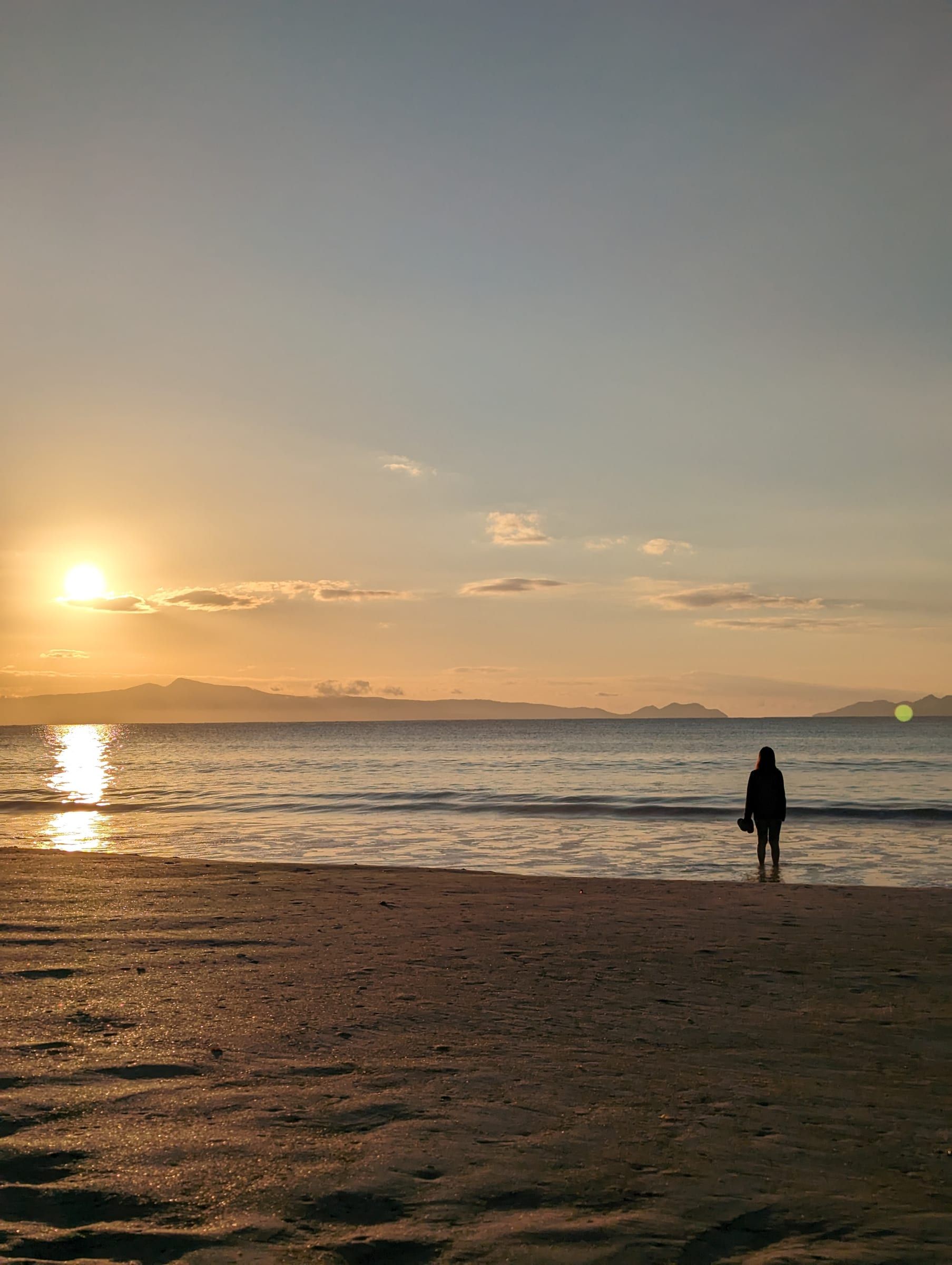 A last quiet minute before wading in.
The last major hike of the trip came later that same day, close to Mayfield Beach: a non-stop, roughly one-hour climb up Three Thumbs Lookout track, about 4km out-and-back to the summit and back. Sweaty, red-faced, properly out of breath by the top, but the view over the coastline made it an easy trade. This was the hike that closed out the trip's hiking on a high note, quite literally.
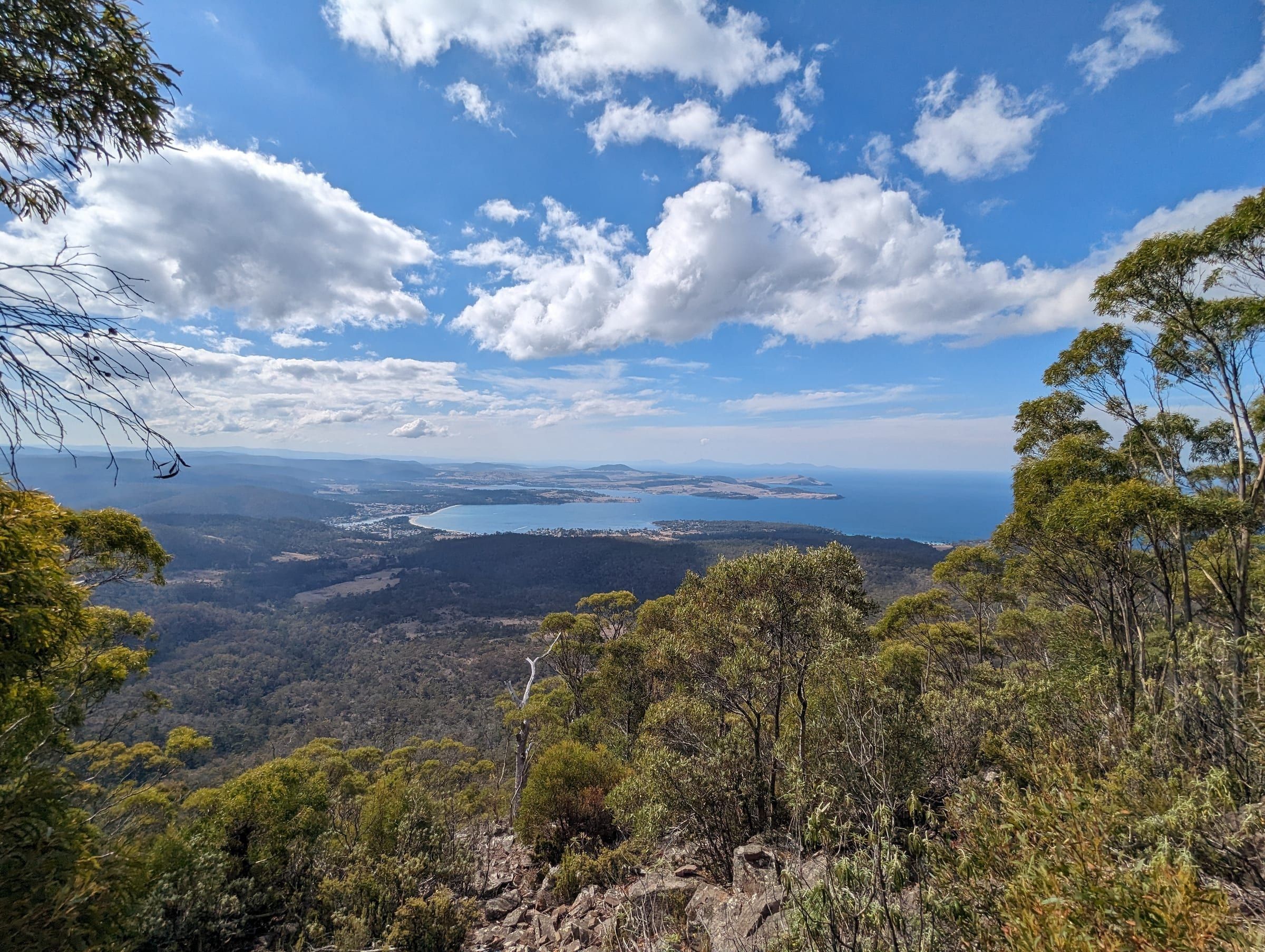 Three Thumbs Lookout, the final climb of the trip: steep, fast, and worth every step at the top.
Where We Slept: Beaches, Riversides, and a Town Frozen in Autumn
Half the appeal of van life is that "where are we staying tonight" becomes a genuinely open question instead of a booking made three weeks in advance. Some nights it had an easy answer; others it came down to whatever we found on the way.
The west coast nights were riverside: quiet, chilly, occasionally drizzly, with the kind of stillness that makes a river look like a photograph rather than a place you're actually standing next to. One night near Cradle Mountain, after a full day of driving through rain, the temperature dropped close to freezing; waking up to frost and a clear sky the next morning made the cold feel earned rather than miserable.
One night in Queenstown, we didn't even make it to a proper campsite, just found a quiet street to park on for a few hours before moving on the next morning. Not glamorous, but it worked, and there's something freeing about realising a "campsite" can just mean wherever the van happens to stop.
Ross, a tiny town partway up the state, might have been the most unexpectedly charming stop of the whole trip. The camp area sat surrounded by golden autumn trees, in a town so quiet and picture-perfect it felt like driving into a film set: old buildings, colourful little houses, and a camp kitchen mostly occupied by grey nomads who'd clearly been doing this for decades longer than we had. We cooked a simple dinner, watched something familiar on a laptop, and went to bed early. It remains one of the calmest nights of the whole trip.
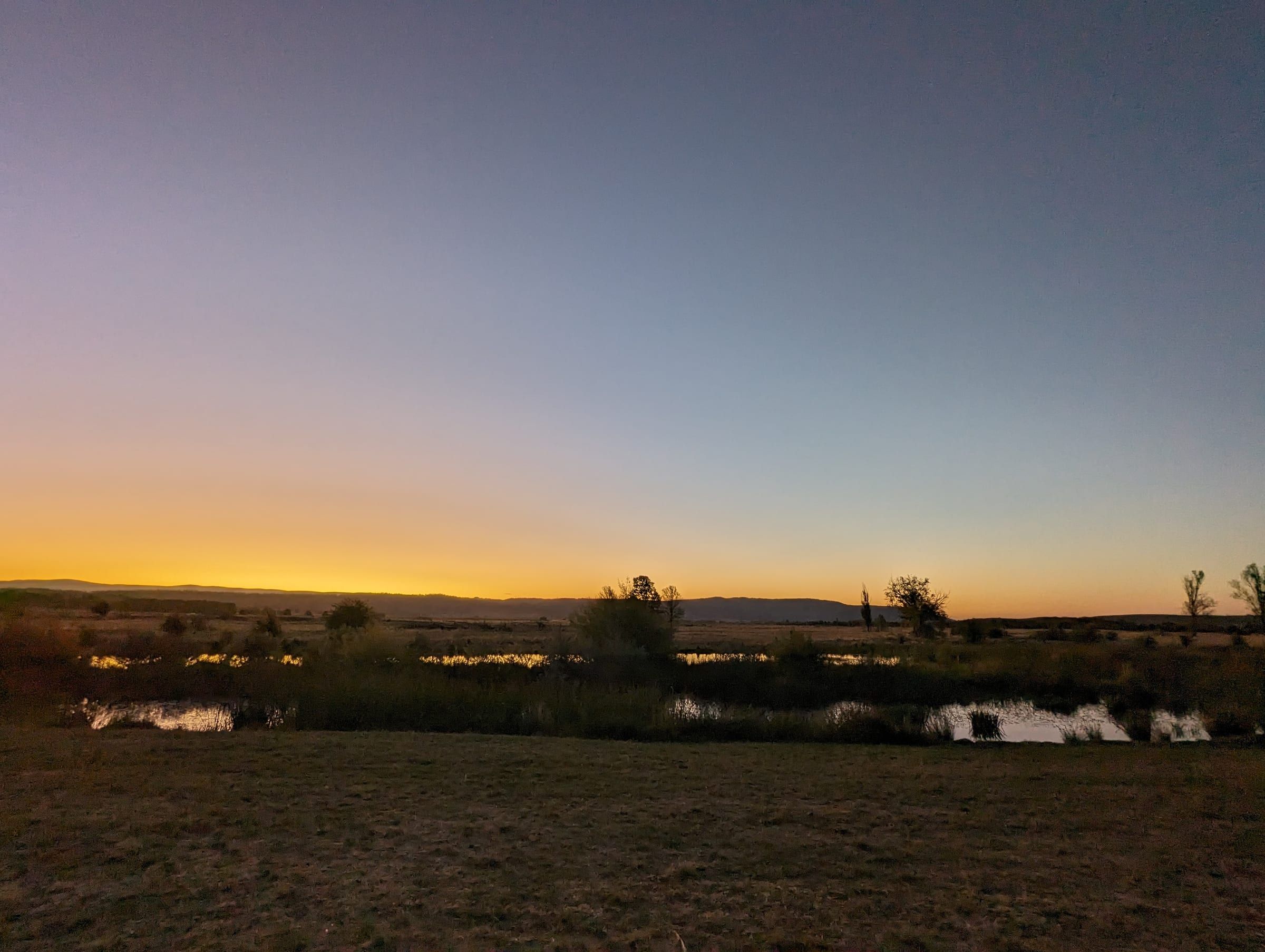 Arriving into the Ross area as the light faded: quiet, golden, empty roads.
The east coast flipped the mood entirely. Mayfield Beach over the Easter long weekend was packed, every obvious spot taken by tents, vans, and cars queued along the foreshore. We got lucky: a spot right on the water, shaded by a big tree, that had just opened up minutes before we rolled in. Waking up with the ocean directly in view, no walls between you and the horizon, is the exact kind of payoff that makes the uncertainty of van life worth it.
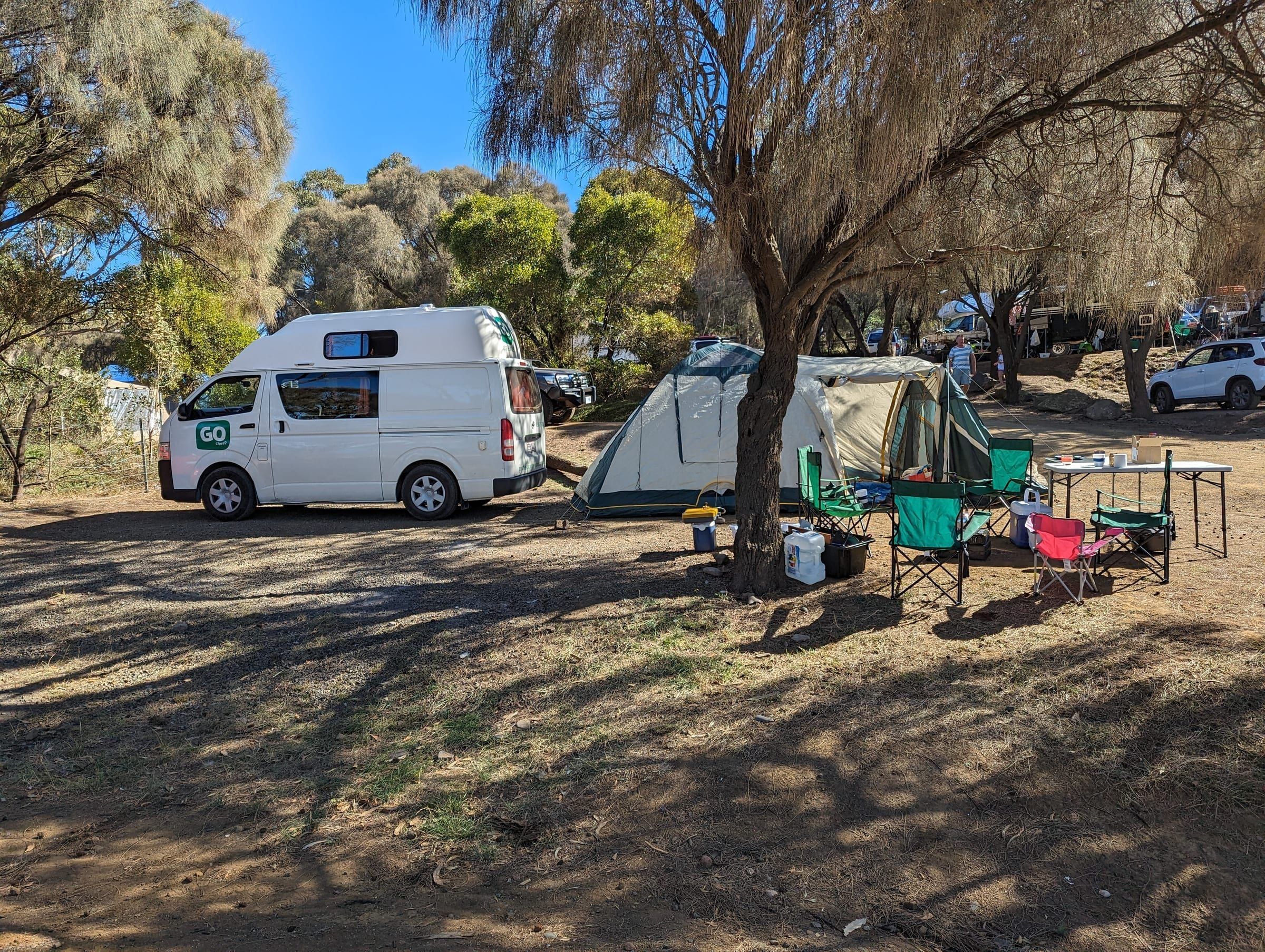 Mayfield Beach on the Easter long weekend: every spot taken, ours included.
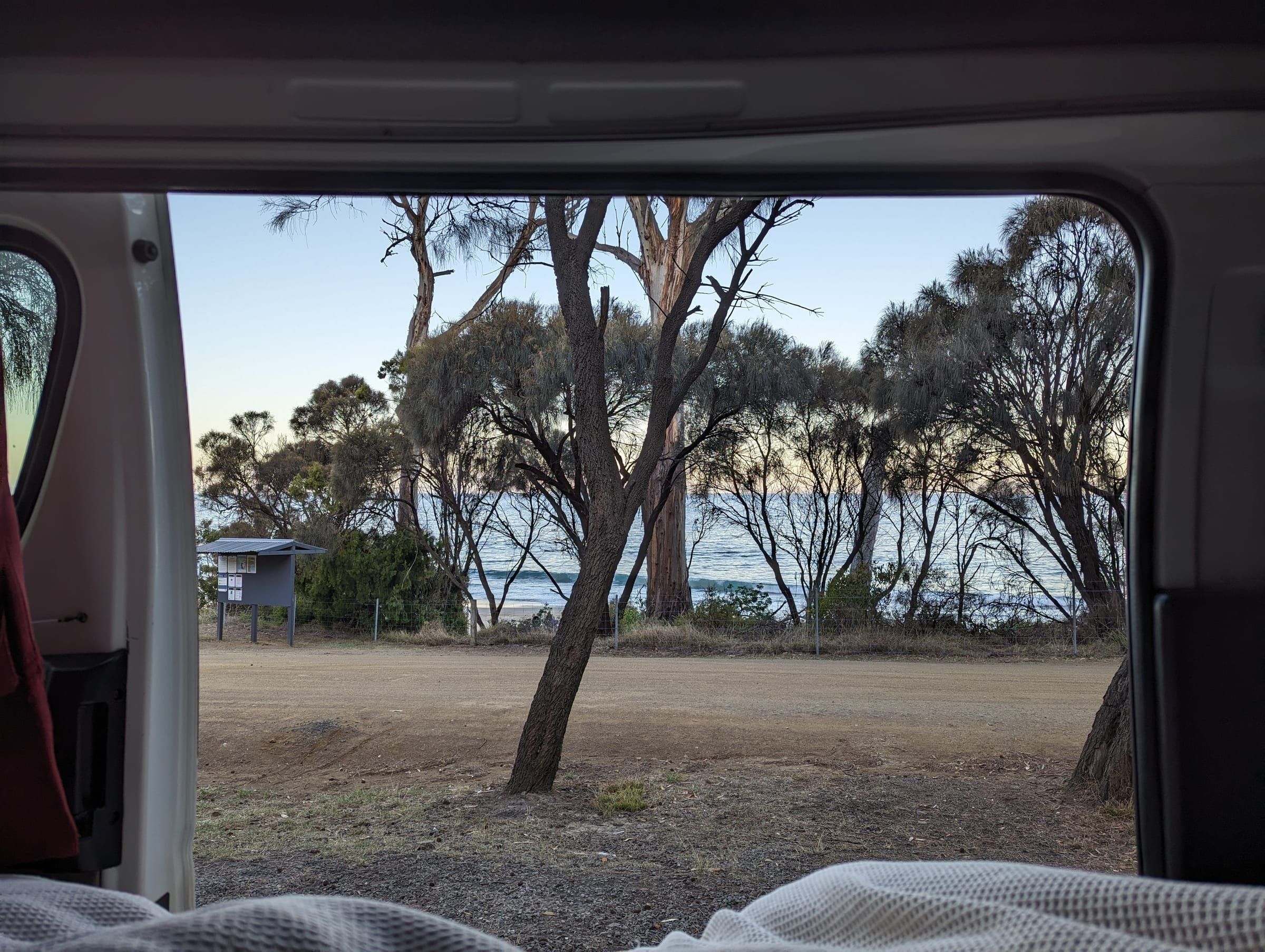 Mayfield Beach: the payoff for showing up without a booking and hoping for the best.
Van Kitchen: Simple Ingredients, Big Flavour
Cooking out of a van forces a kind of discipline that a full kitchen never does: limited space, limited gas, limited fridge room, and somehow that constraint produced some of the best food of the whole trip.
Breakfasts were the ritual that anchored each day: coffee made fresh on the van's stove, most mornings eaten slowly, often outside regardless of the temperature. Eggs, beans, bacon, and avocado became a reliable go-to; on beach mornings it was tuna with croissant and a simple salad instead, eaten with sand still on our feet.
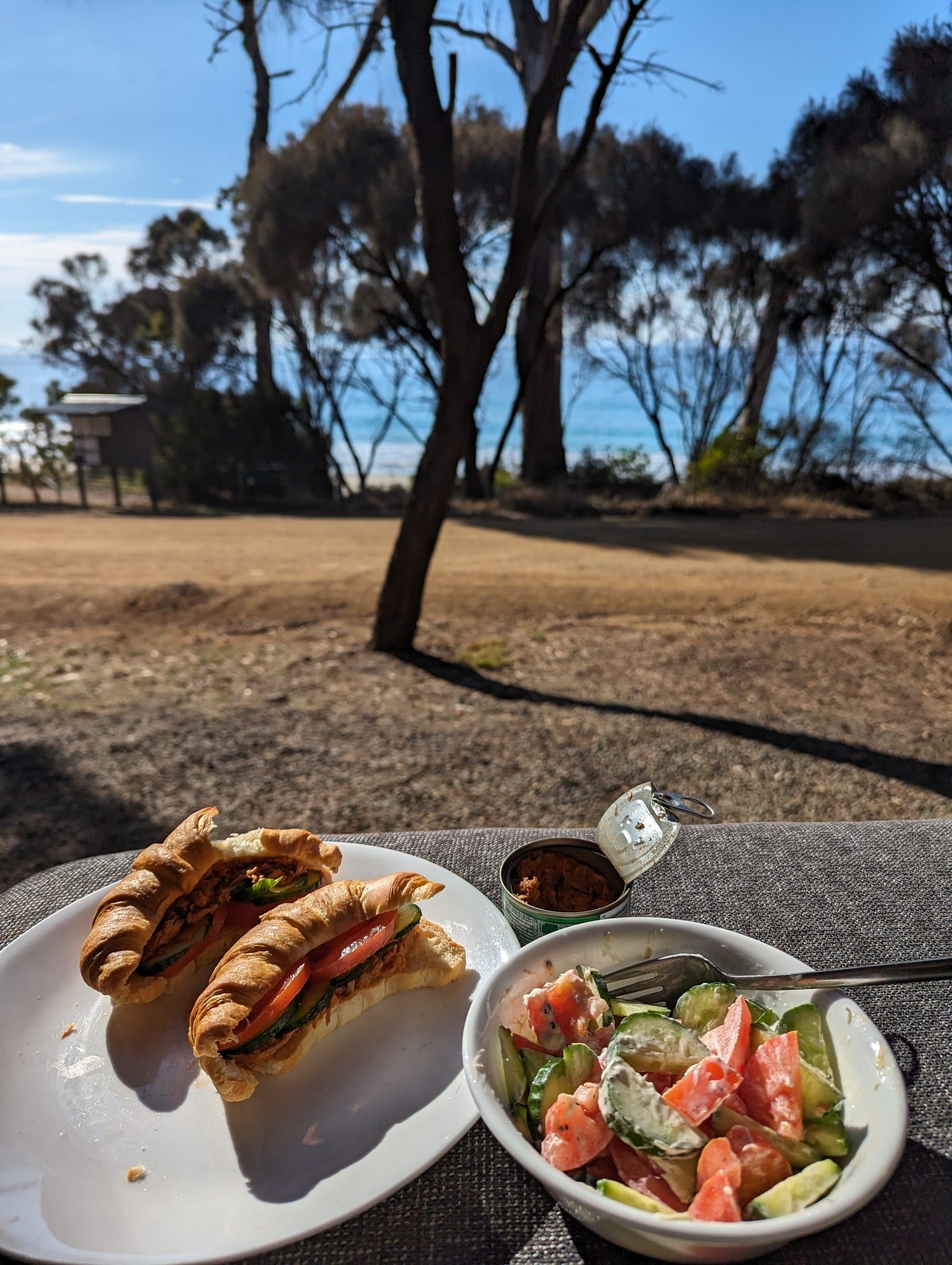 Breakfast at Mayfield Beach: tuna and croissant, eaten with the ocean right there.
The same short list of ingredients (beans, leafy greens, tomato, avocado, corn, eggs, salt, pepper) got rotated night after night and somehow never felt repetitive. A warm soup with whatever vegetables were left in the fridge became the answer on the coldest nights; a proper curry chicken closed out one of the last evenings of the trip. Nothing elaborate, nothing that needed more than one pot, but eaten outside a van at the end of a big hiking day, all of it tasted better than it had any right to.
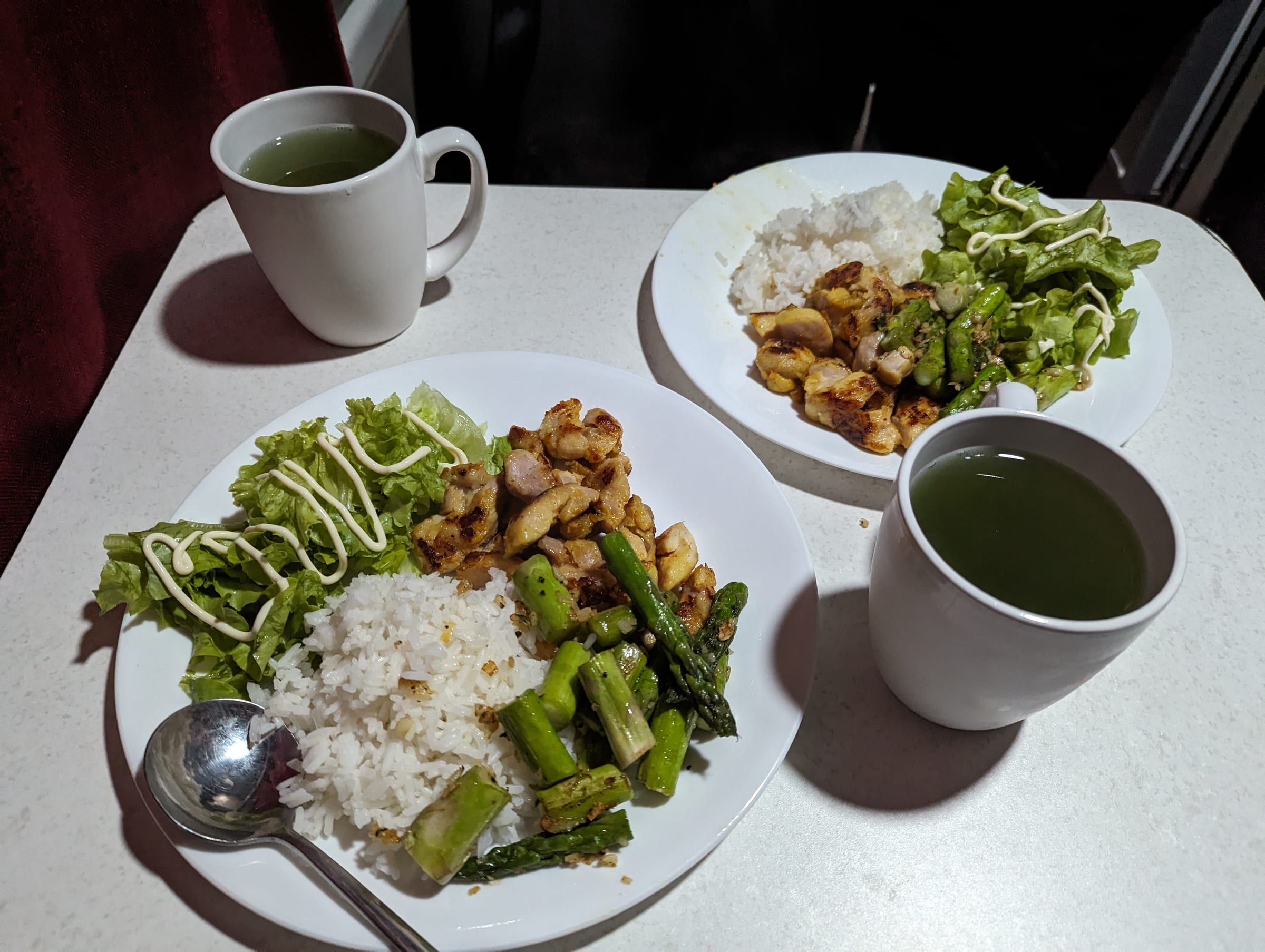 A typical van dinner: one pan, rice, whatever vegetables were left, and tea to finish.
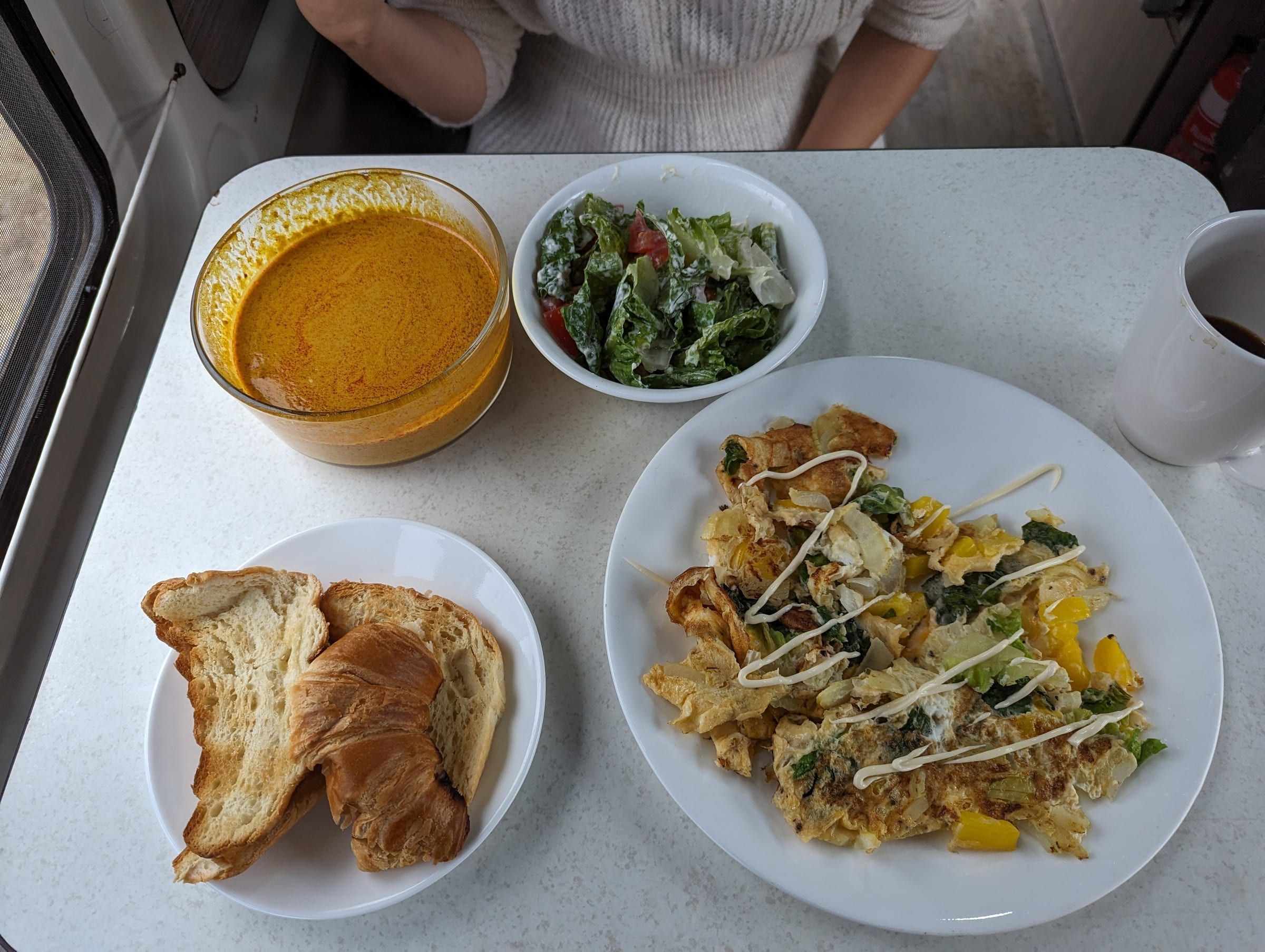 One of the last mornings: a proper spread to fuel the final stretch of driving.
If there's a lesson in there, it's a small one: you don't need a big kitchen or a long grocery list to eat well on the road. You need about eight ingredients, a decent stove, and enough hunger from the day's hike to make anything taste like a proper meal.
What Van Life Actually Taught Me
A few things became clear over these 10 days that I didn't fully expect going in:
- Slow living is a beautiful way of living. Not in an abstract, someday way, but practically, day to day. Waking up without a fixed plan, cooking simple food, being outside more than in, stopping when something looked good instead of sticking to a schedule.
- A handful of ingredients can carry an entire trip. Beans, greens, tomato, avocado, corn, eggs: the same base rotated for days and never once felt repetitive, which says more about the mindset than the menu.
- You don't need much to feel like you're home. Pack up, make the bed, go: wherever you park is home for the night. That's a genuinely freeing way to move through a place.
- Small towns hit differently from a van. Stopping in a quiet countryside town, cooking a simple dinner, and watching an episode of something familiar felt more restorative than any big city stop on the trip.
The Numbers
- Trip length: 10 days, self-drive campervan loop around Tasmania
- Key hikes: Tarn Shelf and Three Falls Walk (Mt Field), the Cradle Mountain climb, and Three Thumbs Lookout (~4km out-and-back) on the east coast
- Total cost: ~$2,000 AUD per person
- Campervan hire + insurance: ~$900 AUD per person
- Remainder covered fuel, campsites, food, and activities
- Campsites: kept deliberately cheap, a mix of low-cost caravan parks and free/low-cost riverside and roadside camps
- Group size: 2
Tips & Tricks: Planning Your Own Trip
Season: late March, early Tasmanian autumn: cold nights (occasionally close to freezing) but mild, sunny days, and thinner crowds than peak summer. Pack for real cold regardless of what the daytime forecast promises.
Campervan booking: ours came in around $900 AUD per person including insurance for 10 days, helped by travelling outside peak summer.
Final Thoughts
There's a specific kind of quiet that only exists in a van at night: engine off, curtains drawn, nothing outside but wind and whatever's growing near the windscreen. I remember lying there one night somewhere between Cradle Mountain and the coast, unable to sleep, just listening to the van creak slightly in the wind, thinking: I could just keep doing this.
I didn't, not right away. Real life was still waiting back in Sydney: a job, a house, a to-do list that had been quietly piling up the whole time I was gone. But something about those 10 days rearranged my sense of what a "normal" weekend could look like. These days, most Fridays end the same way: I throw a bag in the car and go find somewhere to park for the night. It's a smaller, quieter version of Tasmania, repeated as often as I can manage it.
Tasmania didn't teach me to love the road. It just proved I already did, and had been waiting for a reason to admit it.